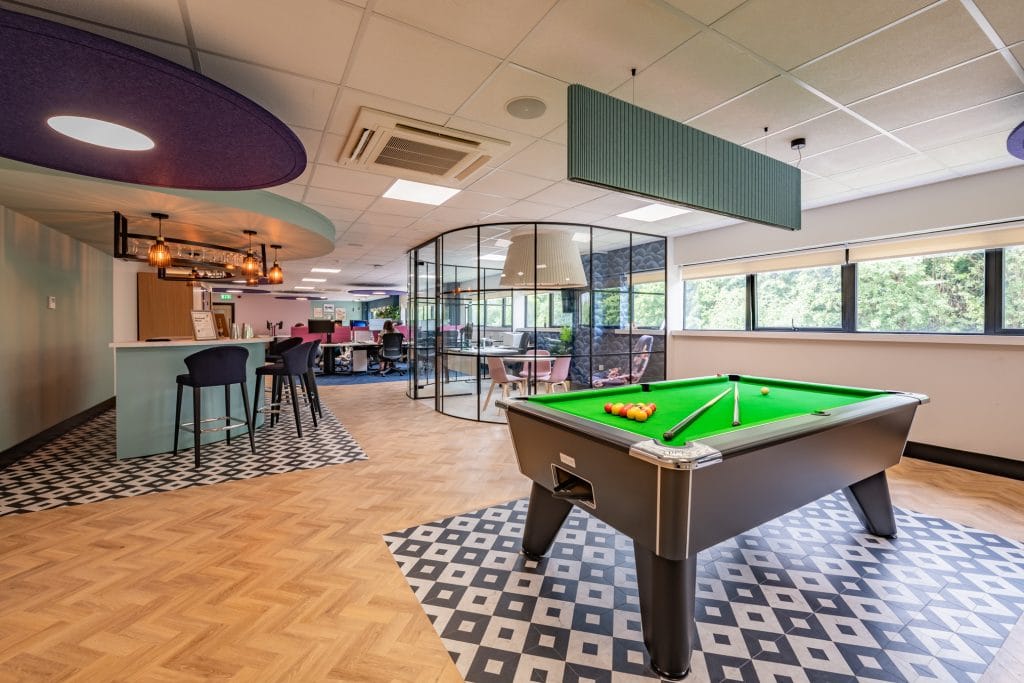


Over the last two years, the world of work has fundamentally changed. To cope with these changes, workplaces are becoming more intelligent than ever before. In this blog post we look at how technology will transform our offices – and explore what our workplaces of the future will really look like.
Flexible workplaces
We’ve said it before, but we will say it again – flexible working is here to stay. Employers are ripping up the rule book on how, where and when people work, and staff are loving the freedom. In fact, an Ernst & Young survey found that nine in ten employees want flexible working to continue.
But to truly make flexible working successful in an organisation, technology has an enormous role to play. Here’s why:
- Plug in and go – if staff are working from multiple locations, they will need their IT equipment to work anywhere. Employees will need to be able to log in to their device quickly and easily. Being able to access exactly the same software and documents they would in the office is essential.
- Hybrid meetings – although some teams may choose to be in the office for meetings, realistically this won’t always be the case. Afterall, life happens! Meeting rooms should be kitted out for hybrid meetings where some people are in the room and others are joining by video call.
- Bookable facilities – As employees will be in the office at different times there will be fewer fixed desks than before. An intelligent booking system will be key to managing desk bookings and office capacity.
- Individual environments – At home, people have greater control over their workspace as they are not sharing it other people. When staff come into the office, they’ll want this control to continue. Smart technology will enable employees optimise their own environment for comfort and productivity.
What does this look like in practice?
Think high-spec ICT equipment, cloud-based services and Zoom calls aplenty. Office design will include a variety of different workspaces such as video call enabled meeting rooms and touchdown spaces. Desk areas will be bookable through smartphone apps or other online systems. Users will have individual control over lighting, temperature and acoustics. Interestingly, AI-based analytics around space usage could also help us to better understand user needs and optimise the use of space over time.

Safer workplaces
Office hygiene has taken on new importance in recent years. Many companies are already exploring intelligent solutions to help employees feel confident about returning to the office:
- Space management – before the pandemic, offices had become much higher density. Now, with social distancing on our minds, offices will use intelligent systems to track and manage the number of people in the office at any one time.
- Temperature checks – Some businesses have introduced a temperature check policy where your temperature is taken before you can enter a workplace. The check is performed by a touchless scanner in a screening kiosk. It may become as normal as swiping a card to gain entry.
- Fresh air – the great outdoors has been linked with wellbeing for many years and biophilic design is a growing office design and fitout trend. But now we know that fresh air disperses COVID particles, we anticipate an even bigger emphasis on open-air elements in offices.
What does this look like in practice?
Space and capacity will be managed by a range of different systems and sensors throughout the building. In many cases, real-time data on occupancy will be available for all employees. This will allow them to make their own decisions about whether they feel comfortable coming into the workplace.
Air con could be replaced by safer ventilation systems that reduce the amount of air shared across the office. Office design will also focus much more on indoor/outdoor workspaces. This could include anything from upgrading outdoors areas so staff can work outside, to installing moving walls that open one side of the office to the fresh air at the click of a button.

The future is now
Intelligent workplaces are most definitely the future. Offices that enable staff to work flexibly and feel comfortable and safe will be able to recruit and retain the best talent and improve employee wellbeing. And with so much exciting, new and affordable technology out there, now’s the perfect time to give your workplace an intelligent upgrade!