
How Office Changes Can Support Staff Retention
Retaining good people is one of the most consistent challenges facing businesses today. Salary, culture, leadership, and career development all play a role. But the physical environment in which people spend their working day is a factor that is regularly underestimated.
A workspace that feels tired, cramped, poorly lit, or simply not designed for the way people actually work sends a message, whether that is intended or not. Equally, a workspace that has been genuinely invested in, that reflects the culture of the business and supports people in doing their jobs well, sends a very different one.
Change is powerful. A workspace transformation, handled well, can shift how people feel about coming to work, reset the culture of a team, and signal clearly that the business is moving forward. That effect is real, and it is felt quickly.
Here is how a well-considered office change can make a real difference to retention, and to the ability to attract the right people in the first place.
The Workplace as a Statement of Intent
When a business invests in its workspace, it signals something to the people who work there. It says that the environment matters, that the team matters, and that the business is committed to providing a place that people can be proud of.
That signal is not lost on employees. In a market where talented people have options, the quality of the working environment is a genuine differentiator. It is increasingly one of the factors candidates consider when choosing between offers, and one of the factors existing employees weigh when deciding whether to stay.
The businesses that treat their workspace as a strategic asset, rather than an overhead to be minimised, tend to see that reflected in how their people feel about the organisation.
Designing for the Way People Work Now
One of the most common sources of workplace dissatisfaction is a mismatch between how people need to work and the environment they are given to work in.
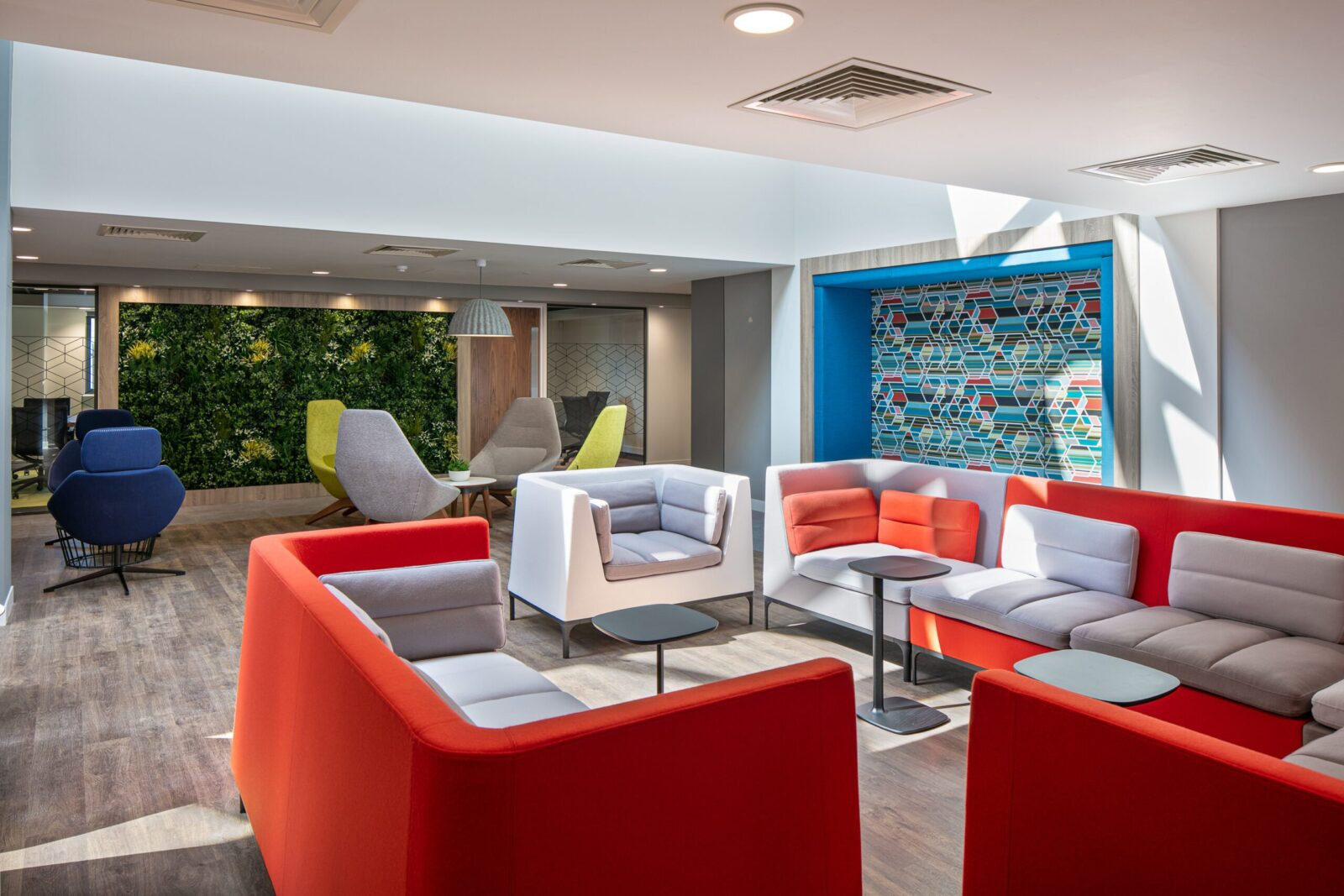
A layout that forces everyone into a single mode, whether that is rows of desks with no quiet space, or an open plan with no room for focused work, will frustrate people regardless of how well it is designed. Variety matters. People need spaces that support concentration, spaces that encourage collaboration, and spaces that allow for informal conversation and social interaction.
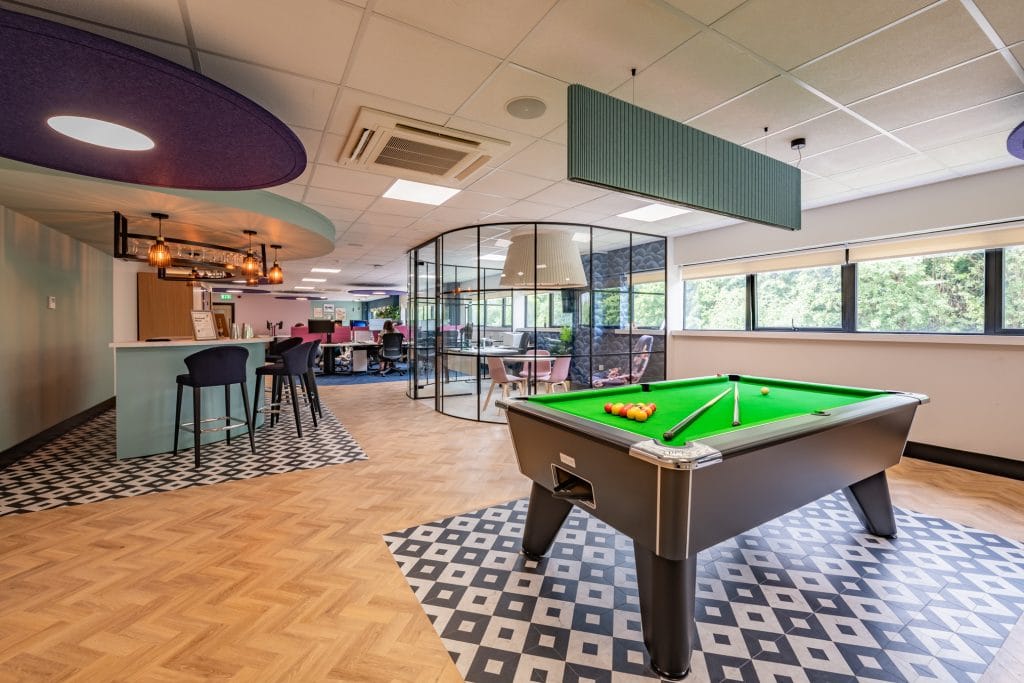
Getting that balance right requires understanding how the business actually operates, which teams need what, and how the day unfolds for different people. When we worked with Caunton Engineering on their headquarters, that understanding was the foundation of everything. The design gave the team a range of environments that reflected how they worked, and the response from the people using the space was immediate.
Wellbeing Is Not a Trend
Workplace wellbeing has been a prominent conversation for several years, and for good reason. The physical environment has a direct and measurable effect on how people feel, how they perform, and how they perceive their employer.
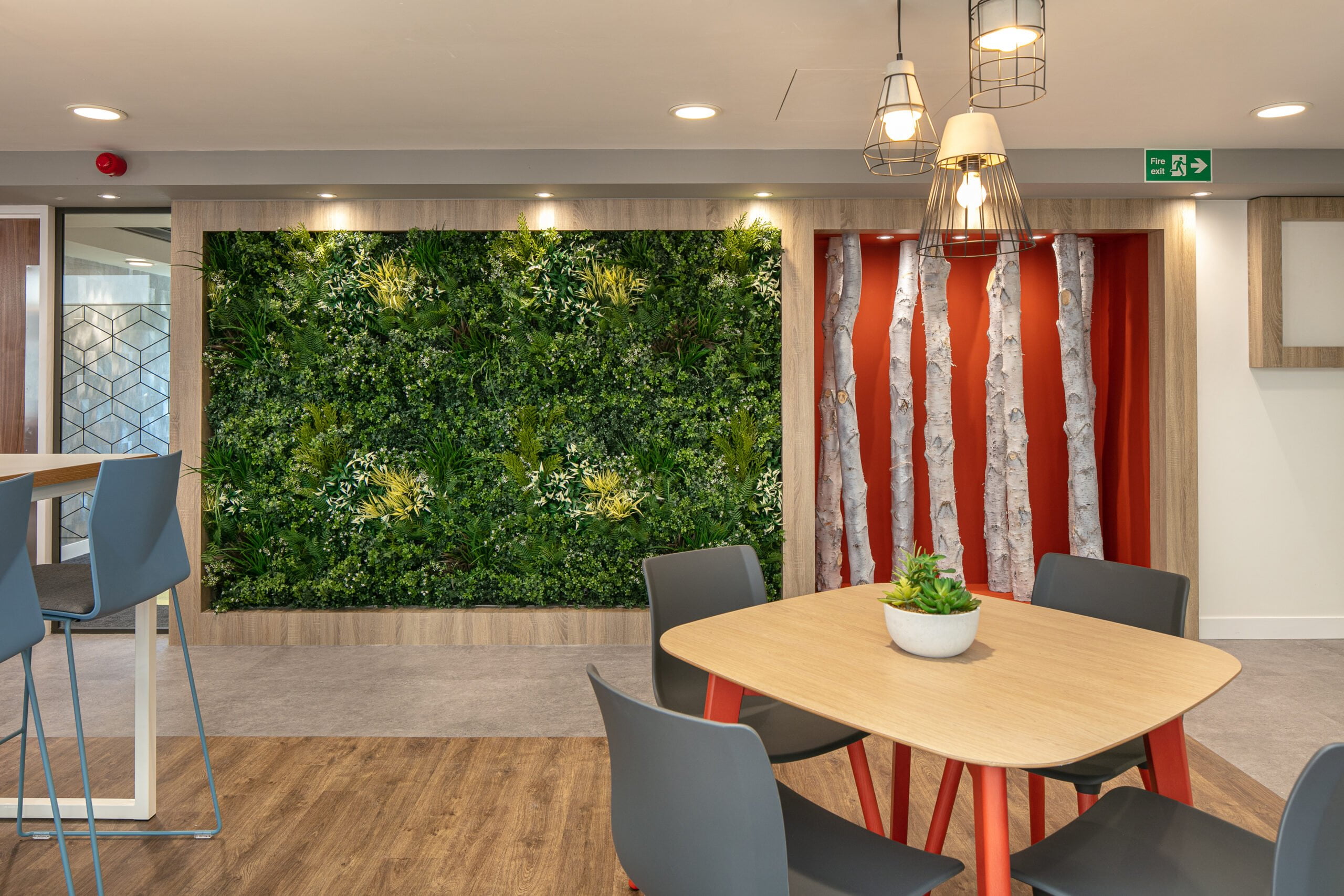
Natural light, biophilic elements, good acoustic design, comfortable and well-considered social spaces, and a quality of finish that communicates care and investment all contribute to a working environment where people feel valued. These are not luxury additions. They are the components of a workspace that supports people properly, and their absence is noticed.
Businesses that invest in these elements tend to find that absenteeism reduces, engagement improves, and people are more likely to speak positively about the organisation to others. That last point matters more than it might initially appear. The way employees talk about their workplace is one of the most powerful recruitment tools a business has.

The Recruitment Dimension
Retention and recruitment are two sides of the same coin. A workspace that retains existing employees is almost always one that attracts new ones.
Candidates increasingly visit offices as part of the recruitment process, and the impression a space makes has a real bearing on decisions. A well-designed, well-maintained workspace that reflects the culture and ambition of the business is a compelling part of the offer. One that feels neglected or generic works against it.
For businesses competing for talent in sectors where the candidate market is tight, the workspace is a genuine competitive advantage. It is one of the few tangible, visible expressions of what the business values and how it operates.
Involving the Team in the Process
One of the most effective ways to maximise the retention benefit of a workspace change is to involve the team in the process.
People who have contributed to the design of their environment, even in modest ways, feel a greater sense of ownership of the finished result. They settle into the new space more quickly, engage with it more positively, and are more likely to speak about it with pride.
That involvement does not need to be complex. Surveys about what is and is not working in the current space, conversations about how different teams prefer to work, and visibility of the design process as it develops all contribute to a sense of shared investment in the outcome.


A Practical Investment With Measurable Returns
The cost of replacing a member of staff, accounting for recruitment fees, onboarding time, lost productivity, and the effect on the wider team, is considerable. For many businesses, the investment in a well-considered workspace change is modest by comparison.
Change has a momentum of its own. When a business transforms its environment, people notice. They talk about it. They bring clients in with pride. They refer colleagues and candidates. The ripple effect of a workspace that genuinely reflects the ambition and culture of a business extends well beyond the four walls it occupies.
That is not an abstract benefit. It is a practical return on a practical investment, and one that businesses consistently tell us they underestimated before they made it.
If you are considering a workspace change and would like to talk through how it could support your team, or visit one of our completed projects to see what is possible, we would be happy to help.