
What to Think About When Designing a New Office
Office design has changed. The expectation from businesses and their people has shifted, and a workspace is no longer judged simply on whether it is functional. It is judged on how it feels, how well it supports different ways of working, and what it communicates about the business.
The offices that leave a lasting impression are the ones where every element has been considered, from the layout to the light fittings, from the acoustic performance to the quality of the materials. This is a guide to the decisions that shape that outcome.
Here is what to think about.
Layout and How People Actually Work
The starting point for any design should be a clear understanding of how the business operates today, not how it operated five years ago.
How many people are in the office on a typical day? Where does collaboration happen naturally, and where does focused work need protection? Are there client-facing moments that need a different quality of environment to the operational areas behind them?
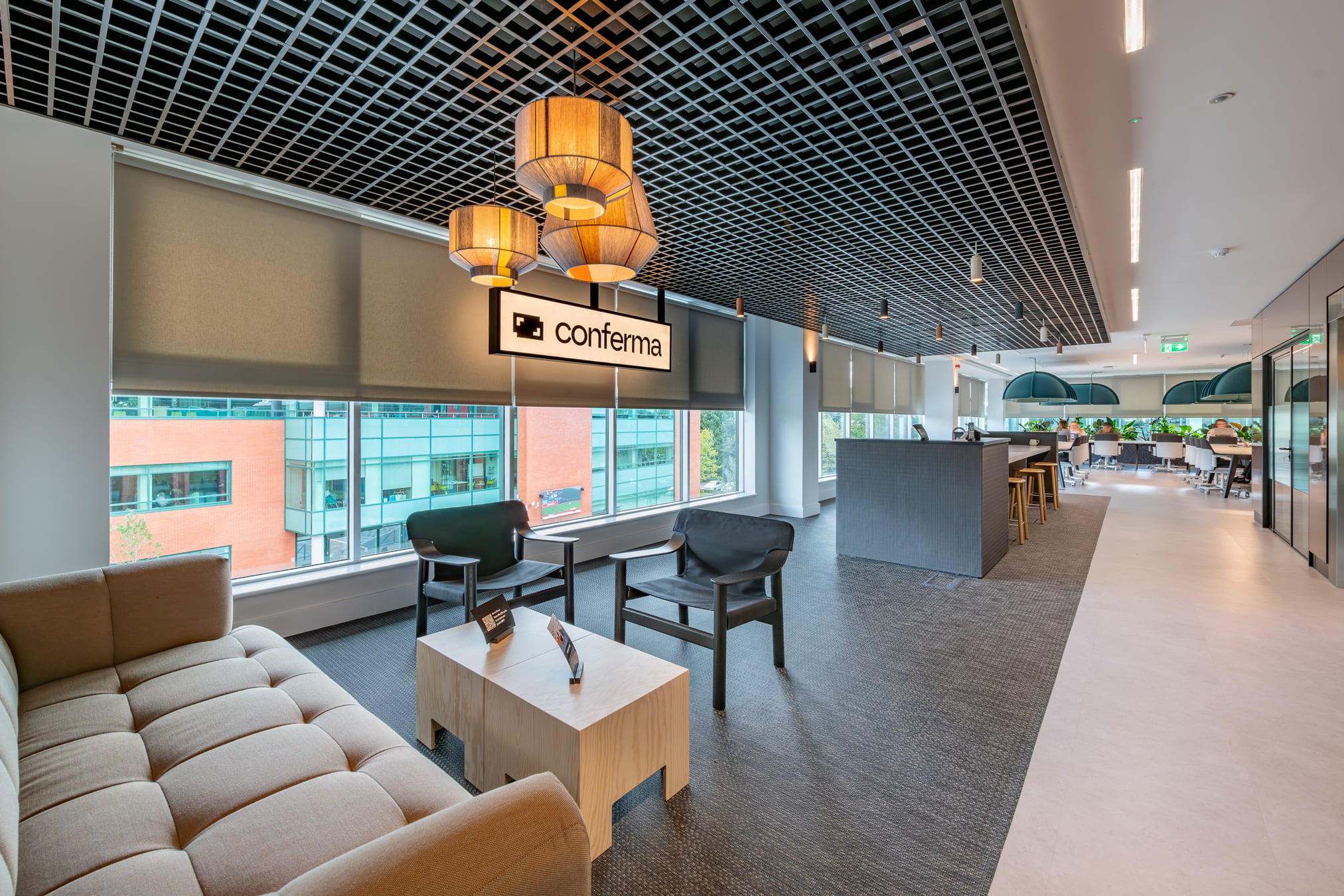
A layout built around these realities will always outperform one built around a standard template. When we worked with Conferma, we spent time understanding how their teams operated before a single line was drawn. The result was a layout that felt genuinely built for the business rather than imposed upon it.
Biophilic Design
This makes one of the most tangible differences to how a space feels, and remains underused in commercial fit outs.
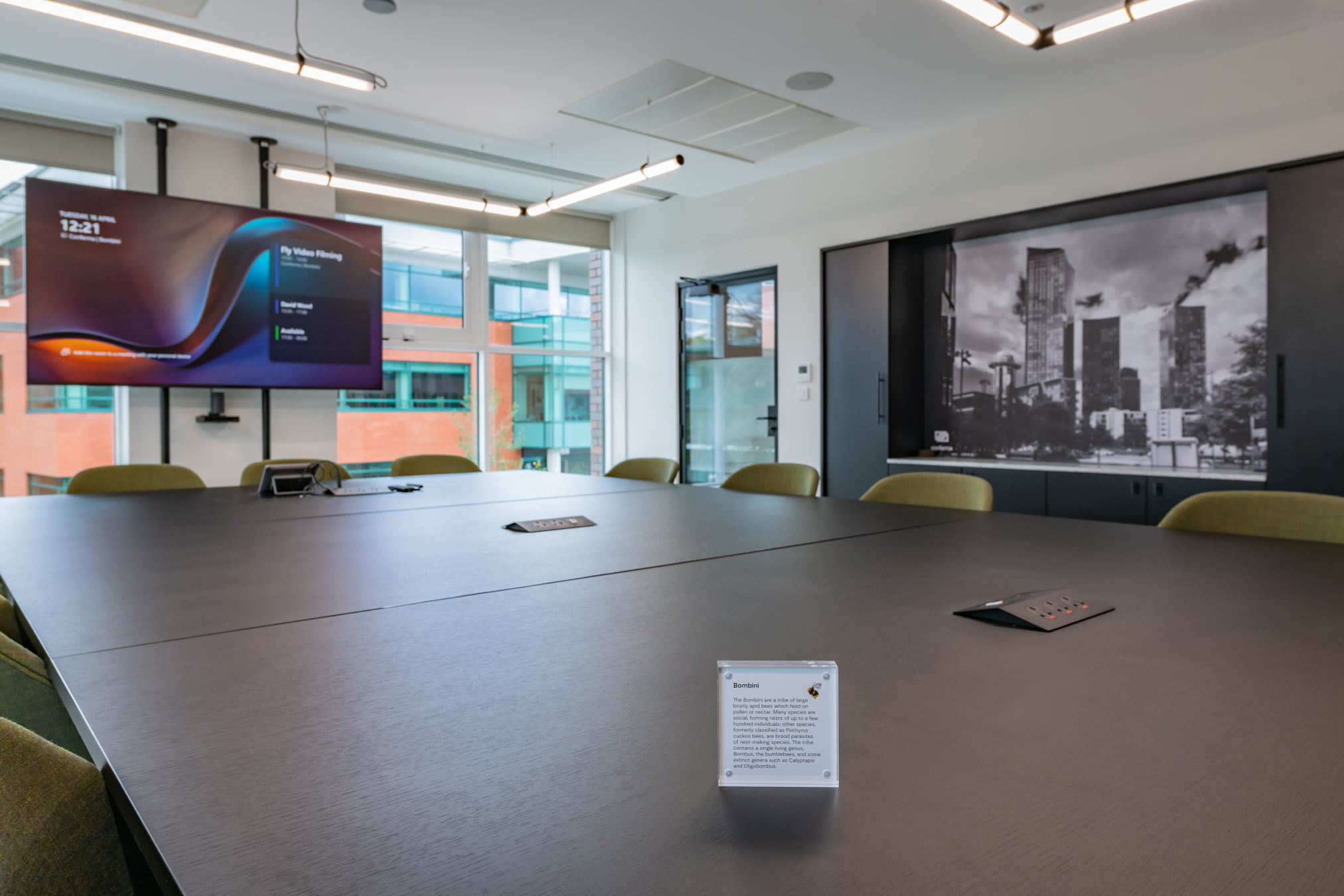
Biophilic design is the integration of natural elements into the built environment. At its simplest, that means plants. At a more considered level, it means natural materials, timber, stone, and tactile finishes, natural light, living walls, and design that creates a genuine connection to the natural world within a commercial setting.
The evidence for its impact on wellbeing, focus, and productivity is well established. It does not require a large budget. Thoughtful placement of planting, the use of natural materials, and maximising natural light can deliver a significant effect without dramatically increasing cost. On the Kingspan project, the integration of natural textures, warm materials, and considered planting was central to how we approached the scheme, and it fundamentally changed the atmosphere of the space.
Light
Natural light should be maximised wherever the building allows. The positioning of workstations, meeting rooms, and partitions all affect how light moves through the space.
Artificial lighting needs to do several things at once. Task lighting for focused work, atmosphere in social and collaborative areas, and enough variation to avoid the flat, uniform quality that makes so many offices feel uninspiring. Layered lighting gives a space depth that a ceiling-only installation cannot achieve.
Acoustics
Acoustic performance is the consideration that comes up most in feedback once a space is in use, usually because it was not given enough attention at the design stage.
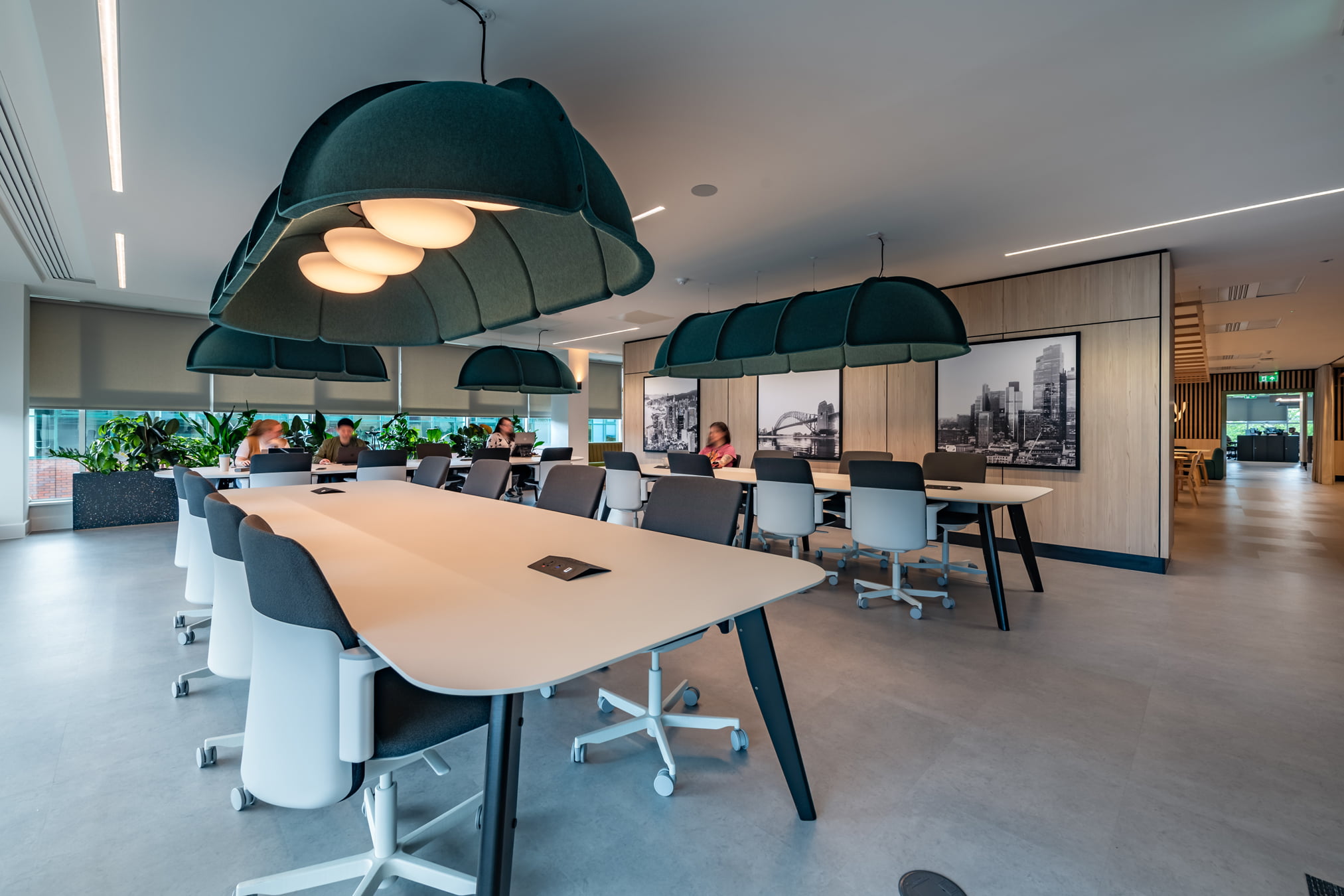
Open-plan environments concentrate noise. Without deliberate acoustic design, the result is a space where people struggle to focus and phone calls feel exposed. The solution is not panels on walls. It is materials, ceiling treatments, the positioning of noisy functions relative to quiet ones, and the provision of enclosed spaces for calls and concentrated work.
Brand and Identity
The offices that feel most distinctive are the ones where the space has been designed as a genuine expression of the business. Brand expression goes beyond a logo on the wall. It is colour, materiality, the quality of finishes, and the details that tell a visitor immediately who the business is.
With Hattons of London, this was central to the brief from the start. We worked closely with the team to ensure every element of the design, from the finishes to the furniture to the graphic detailing, reflected the character and ambition of the business. It is a space that could not belong to anyone else.
Collaborative and Social Spaces
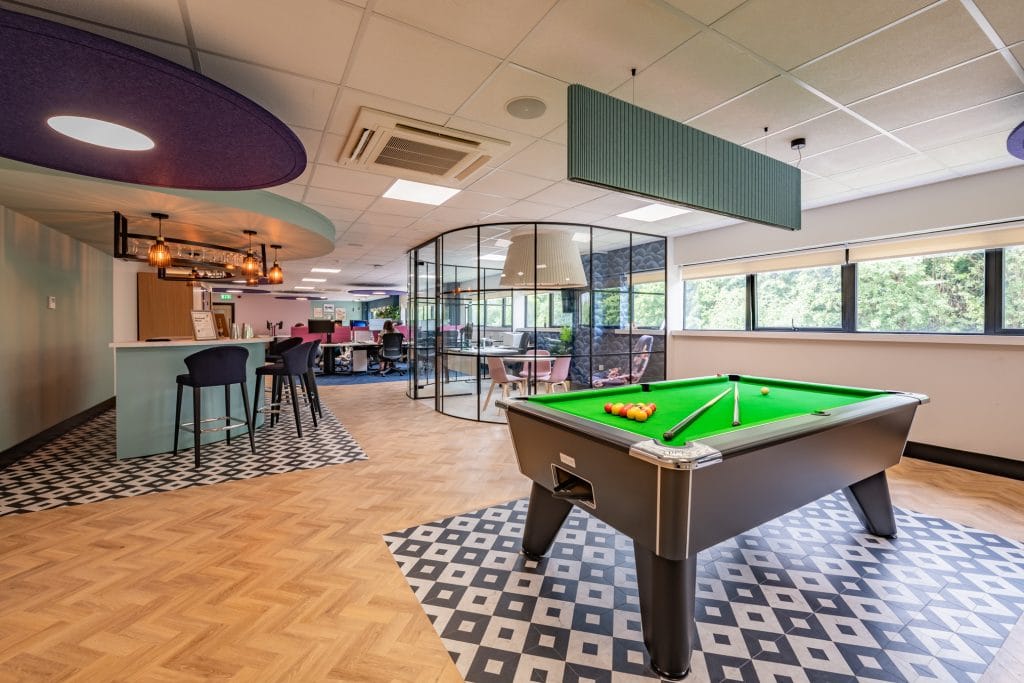
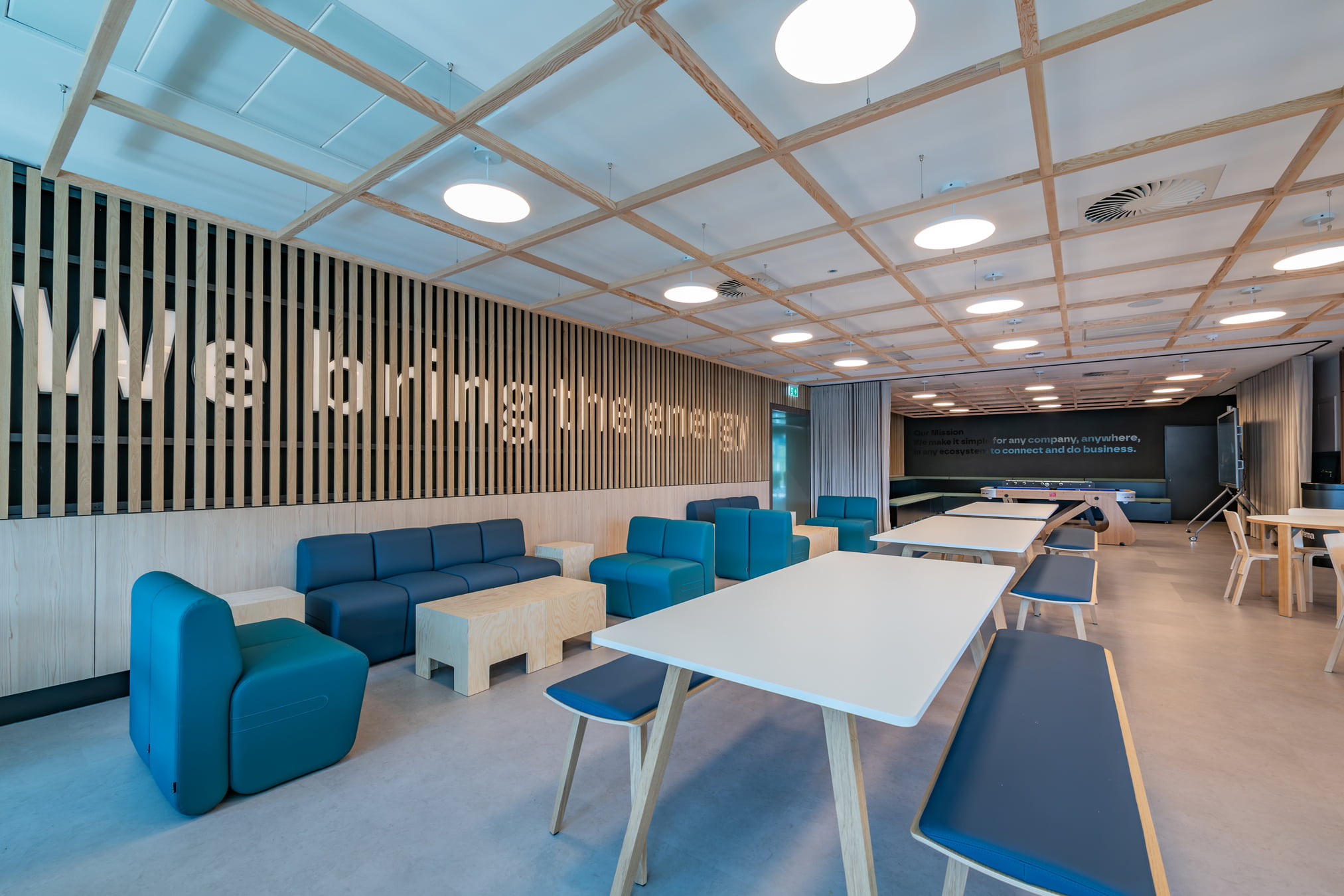
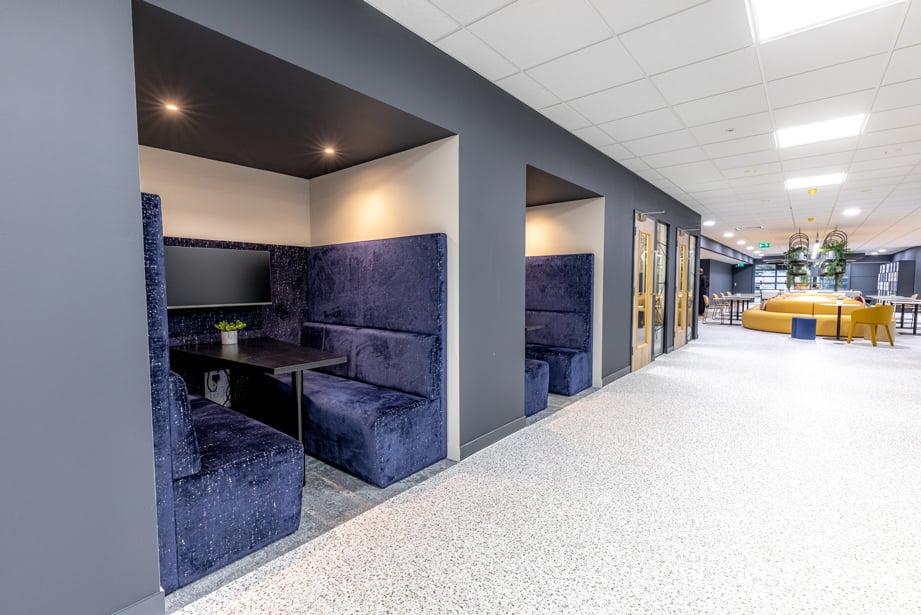
The office is increasingly a place to connect and collaborate rather than simply a place to work. That shift has design implications. Breakout areas, kitchen and social spaces, and informal meeting areas all deserve the same design attention as formal meeting rooms.
When these spaces work well, they become one of the things people value most about coming in.

The Details Matter
The difference between a good office and a great one is often found in the details. The quality of the joinery. The finish on the feature wall. The consistency of the palette. These are the elements that give a space a sense of quality and permanence, and that tell everyone who uses it that the business takes its environment seriously.
How We Work With You
Before anything gets drawn up, we spend time with you in your current space, understanding how your business works, how your teams operate day to day, and what the new environment needs to deliver. That understanding shapes everything, from the layout to the material choices to the way the space is phased and built.
It is a part of the process we invest in heavily, because a design that is rooted in how a business actually works will always outperform one that is not. We also arrange visits to completed projects so you can see the quality of the build for yourself and speak directly with clients who have been through the process.
If you are planning a new office and would like to start that conversation, we would be happy to help.